If you click on the links and make a purchase, we may earn a commission.
The best TVs for gaming combine excellent picture quality with low input lag, fast refresh rates, HDMI 2.1 connectivity, VRR, HDR, and gaming-focused features. Today’s gaming TVs can deliver an immersive experience without requiring a dedicated gaming monitor.
Table of Contents

Image Credit: Canva
Whether you play on a PS5, Xbox Series X|S, Nintendo Switch, or gaming PC, choosing the right TV can make a significant difference. Resolution matters, but features such as refresh rate, variable refresh rate, response time, input lag, and HDMI bandwidth can be even more important.
OLED TVs are popular among gamers because of their fast pixel response and excellent contrast, while Mini-LED and QLED TVs can provide higher brightness and are often excellent choices for bright rooms.
In this guide, we’ve compared the best gaming TVs in 2026 for competitive gaming, console gaming, PC gaming, HDR, movies, and everyday entertainment.
Quick Comparison: Best TVs for Gaming
| Gaming TV | Best For | Key Feature | Resolution | Refresh Rate* | Rating |
|---|---|---|---|---|---|
| LG C5 OLED | Best Overall | OLED + HDMI 2.1 | 4K | Up to 144Hz | 9.8/10 |
| Samsung S95F OLED | Best Premium | QD-OLED | 4K | Up to 165Hz | 9.8/10 |
| Samsung QN90F | Best Bright Room | Neo QLED Mini-LED | 4K | Up to 165Hz | 9.7/10 |
| LG G5 OLED | Best Premium OLED | Advanced OLED | 4K | Up to 165Hz | 9.8/10 |
| Hisense U7 Series | Best Value Gaming | Mini-LED + QLED | 4K | Up to 165Hz | 9.5/10 |
| TCL QM8K | Best Mini-LED Value | Mini-LED QLED | 4K | Up to 144Hz | 9.5/10 |
| LG B5 OLED | Best Budget OLED | OLED gaming | 4K | Up to 120Hz | 9.3/10 |
| TCL QM6K | Best Affordable | QLED + Mini-LED | 4K | Up to 144Hz | 9.3/10 |
Refresh rate and gaming specifications vary by model, screen size, and region. Check the exact manufacturer’s specifications before purchasing.
1. LG C5 OLED — Best Gaming TV Overall
The LG C5 OLED is our overall choice for gamers because it combines excellent picture quality with fast response, high refresh rates, HDMI 2.1, VRR, and a broad range of gaming features.
OLED technology gives each pixel independent control, allowing the TV to produce deep blacks and extremely high contrast.

- BRIGHTNESS BOOSTER: Brighter visuals and vivid detail with Brightness Booster powered by the a11 AI Processor Gen 3
- PERFECT BLACK AND PERFECT COLOR: Over 8.3 million self-lit smart pixels with Perfect Black and Perfect Color technology¹…
- A11 AI PROCESSOR: Find and choose what to watch fast, without lag, and enjoy optimized picture with AI Director Processi…
Key Features
- 4K OLED
- High refresh rate
- HDMI 2.1
- VRR
- Low input lag
- HDR
- Dolby Vision
- Game Optimizer
- AMD FreeSync support on applicable models
- NVIDIA G-SYNC compatibility on applicable models
- webOS
The C5 works exceptionally well for both console and PC gaming.
Best For
PS5, Xbox, PC gaming, competitive gaming, HDR games, and movies.
Our Rating: 9.8/10
2. Samsung S95F OLED — Best Premium Gaming TV
The Samsung S95F OLED is an excellent choice for gamers who want premium QD-OLED picture quality combined with advanced gaming performance.

- OLED HDR+ WITH GLARE FREE*: Experience incredible brightness and deep contrast. Advanced AI enhances details, while Glar…
- NQ4 AI GEN3 PROCESSOR: Powered by 128 neural networks to deliver AI-enhanced picture and sound, resulting in an exceptio…
- ULTIMATE GAMING PACK*: Conquer the competition with ultra-smooth, tear-free, low-latency gameplay and real-time responsi…
Key Features
- 4K QD-OLED
- High refresh rate
- HDMI 2.1
- VRR
- Low input lag
- HDR
- Gaming Hub
- FreeSync support
- Tizen
- Excellent color performance
Its combination of OLED contrast and strong color volume makes HDR games look particularly impressive.
Best For
Premium console gaming, PC gaming, HDR gaming, and enthusiasts.
Our Rating: 9.8/10
3. Samsung QN90F — Best Gaming TV for Bright Rooms
The Samsung QN90F is an excellent alternative to OLED for gamers with bright rooms.
Its Neo QLED and Mini-LED technology can deliver high brightness while maintaining strong contrast through local dimming.

- NQ4 AI Gen3 Processor: Uses AI to delivers incredible 4K picture and dynamic sound for everything you watch | 4K AI Upsc…
- Glare Free: Get virtually no glare so all you see is the content on screen, even in bright rooms | Neo Quantum HDR+: Dee…
- Cleans without Dripping: The non ammonia and alcohol free screen cleaning solution doesn’t damage display screens | Remo…
Key Features
- 4K Neo QLED
- Mini-LED backlighting
- High refresh rate
- HDMI 2.1
- VRR
- Low input lag
- HDR
- FreeSync support
- Gaming Hub
- Anti-reflection technology on applicable models
The QN90F is especially appealing for daytime gaming.
Best For
Bright rooms, sports, console gaming, PC gaming, and HDR.
Our Rating: 9.7/10
4. LG G5 OLED — Best Premium OLED for Gaming
The LG G5 OLED is designed for shoppers who want an elite OLED gaming and home-theater experience.

- Samsung’s 27” Odyssey OLED G5 QHD Gaming Monitor delivers hyper-real visuals and lightning-fast action.
- QD-OLED with QHD resolution provides unmatched picture quality and produces the highest levels of color accuracy and bri…
- OLED Safeguard keeps the screen cool by actively helping to prevent burn-in with a Thermal Modulation System.
Key Features
- 4K OLED
- Advanced OLED panel
- High brightness
- High refresh rate
- HDMI 2.1
- VRR
- Game Optimizer
- HDR
- Dolby Vision
- webOS
The G5 is particularly attractive for wall-mounted gaming setups and dedicated entertainment rooms.
Best For
Enthusiasts, premium gaming rooms, home theaters, and competitive players.
Our Rating: 9.8/10
5. Hisense U7 Series — Best Value Gaming TV
The Hisense U7 Series provides an impressive combination of QLED color, Mini-LED technology on applicable models, and gaming features at a more accessible price.
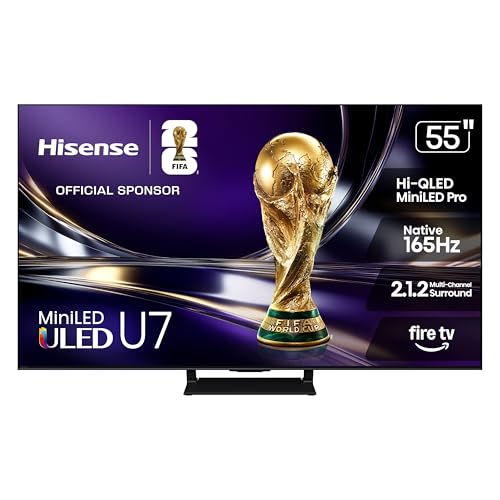
- HI – QLED MINILED PRO: Thousands of MiniLED backlights deliver pinpoint control for vibrant, lifelike pictures. Whether …
- NATIVE 165HZ REFRESH RATE: Advanced motion technology handles gaming, sports and action at high speeds. There’s no blur,…
- ANTI-REFLECTION & GLARE-FREE: Bright windows, overhead lights, afternoon sun—your screen handles it all. The anti-glare …
Key Features
- 4K resolution
- QLED
- Mini-LED on applicable models
- High refresh rate
- VRR
- HDMI 2.1
- Game Mode
- HDR
- Google TV
For gamers who want high-refresh-rate performance without spending flagship-TV money, the U7 Series is worth considering.
Best For
PS5, Xbox, PC gaming, sports, and value-focused gamers.
Our Rating: 9.5/10
6. TCL QM8K — Best Mini-LED Gaming Value
The TCL QM8K is a strong choice for gamers who prefer Mini-LED technology and high brightness.

- QD-MINI LED: This premium level Mini LED TV, now with the New TCL Halo Control System, ensures a stunning viewing experi…
- TCL HALO CONTROL SYSTEM: An advanced Technology Suite that includes the New Super High Energy LED Microchip, Condensed M…
- CRYSTGLOW WHVA PANEL: Stunning picture quality from any seat with the anti-reflective edge-to-edge ZeroBorder* panel tha…
Key Features
- 4K resolution
- QLED
- Mini-LED
- Local dimming
- High refresh rate
- HDMI 2.1
- VRR
- HDR
- Game Mode
- Google TV
Its high brightness can make HDR gaming particularly impressive.
Best For
HDR gaming, bright rooms, console gaming, PC gaming, and value shoppers.
Our Rating: 9.5/10
7. LG B5 OLED — Best Budget Gaming OLED
The LG B5 OLED offers an affordable route into OLED gaming.

- ALPHA 8 AI PROCESSOR GEN2: Enjoy outstanding picture, which uses AI to detect what you’re watching and automatically imp…
- OLED TECHNOLOGY WITH SELF-LIT PIXELS: OLED technology creates an incredible watching experience and stellar picture qual…
- DOLBY VISION, DOLBY ATMOS, FILMMAKER MODE: Enjoy movie magic. Loaded with Dolby Vision for extraordinary color, contrast…
Key Features
- 4K OLED
- 120Hz-class refresh rate
- HDMI 2.1
- VRR
- Low input lag
- HDR
- Game Optimizer
- Dolby Vision
- webOS
It may not include all the premium features of LG’s higher-end models, but it retains the core OLED advantages that gamers appreciate.
Best For
Budget gamers, PS5, Xbox, PC gaming, and smaller gaming rooms.
Our Rating: 9.3/10
8. TCL QM6K — Best Affordable Gaming TV
The TCL QM6K is a strong value option for gamers who want modern gaming features without a premium price.

- QD-Mini LED: This premium level of Mini LED TV, now with the New TCL Halo Control System, ensures a high-quality viewing…
Key Features
- 4K resolution
- QLED
- Mini-LED
- HDR
- High refresh-rate options
- VRR
- Gaming Mode
- HDMI connectivity
- Google TV
It offers an attractive combination of gaming features and general entertainment performance.
Best For
Casual gaming, family rooms, streaming, and budget-conscious buyers.
Our Rating: 9.3/10
What Makes a Good Gaming TV?
A gaming TV needs more than a high-resolution display. The most important specifications include refresh rate, input lag, response time, HDMI bandwidth, VRR, HDR, and gaming modes.
1. Refresh Rate
Refresh rate determines how many times the display can update its image each second.
Common TV refresh rates include:
- 60Hz
- 120Hz
- 144Hz
- 165Hz
For modern gaming, 120Hz or higher is generally preferable when supported by your console or PC.
Higher refresh rates can make movement feel smoother and more responsive.
2. Input Lag
Input lag measures the delay between pressing a controller button and seeing the result on screen.
For gaming, lower is better.
A good gaming TV should have a dedicated Game Mode designed to minimize processing delays.
This can make fast-paced games feel significantly more responsive.
3. HDMI 2.1
HDMI 2.1 is particularly important for gamers using modern consoles and PCs.
It can support features such as:
- 4K at high refresh rates
- VRR
- ALLM
- Higher bandwidth
- Advanced gaming signals
If you own a PS5, Xbox Series X, or gaming PC, check how many HDMI ports actually support the gaming features you need.
4. VRR
Variable Refresh Rate (VRR) synchronizes the TV’s refresh rate with the game’s frame rate.
This can reduce:
- Screen tearing
- Stuttering
- Visual inconsistencies
VRR is particularly useful when game frame rates fluctuate.
5. HDR
HDR can significantly improve gaming visuals by providing brighter highlights, deeper contrast, and richer colors.
Look for:
- HDR10
- Dolby Vision
- HDR10+
- HLG
Support varies between TVs, consoles, PCs, and games.
OLED vs QLED for Gaming
| Feature | OLED | QLED/Mini-LED |
|---|---|---|
| Response time | Excellent | Very good |
| Black levels | Excellent | Very good to excellent |
| Brightness | Very good to excellent | Often excellent |
| Contrast | Excellent | Excellent on premium models |
| Burn-in risk | Possible | Very low |
| Viewing angles | Usually excellent | Varies |
| HDR brightness | Very good to excellent | Often excellent |
| Gaming | Excellent | Excellent |
| Bright rooms | Good to excellent | Often excellent |
| Price | Mid to premium | Budget to premium |
OLED is excellent for gamers who prioritize response time and contrast, while Mini-LED QLED can be particularly attractive for bright rooms and gamers concerned about long-term static elements.
Best Gaming TVs by Use Case
| Gaming Use Case | Recommended TV |
|---|---|
| Best overall | LG C5 OLED |
| Best premium | Samsung S95F OLED |
| Best bright-room gaming | Samsung QN90F |
| Best premium OLED | LG G5 OLED |
| Best value gaming | Hisense U7 Series |
| Best Mini-LED value | TCL QM8K |
| Best budget OLED | LG B5 OLED |
| Best affordable gaming | TCL QM6K |
| Best HDR gaming | Samsung S95F OLED |
| Best PC gaming | LG C5 OLED |
Best TV for PS5 Gaming
PS5 owners should look for:
- 4K resolution
- 120Hz
- HDMI 2.1
- VRR
- ALLM
- Low input lag
- HDR
The LG C5 OLED, Samsung S95F, and Samsung QN90F are strong options depending on your budget and room conditions.
Best TV for Xbox Series X
Xbox Series X gamers can benefit from:
- 4K/120Hz
- VRR
- HDMI 2.1
- FreeSync support
- Dolby Vision Gaming on compatible systems
- Low input lag
A good high-refresh-rate OLED or Mini-LED QLED can take full advantage of Xbox’s graphical capabilities.
Best TV for PC Gaming
PC gamers have different requirements because powerful gaming PCs can generate frame rates beyond 120fps.
Consider:
- 144Hz or higher
- HDMI 2.1
- DisplayPort availability where relevant
- VRR
- FreeSync
- G-SYNC compatibility
- Low input lag
- Large screen size
A high-refresh-rate OLED can provide an excellent large-format PC gaming experience.
OLED Burn-In and Gaming
OLED gamers should be aware of potential image retention.
Long-term static elements such as:
- Game HUDs
- Health bars
- Maps
- Scoreboards
- Desktop interfaces
can potentially contribute to burn-in under certain usage patterns.
Modern OLED TVs use protective features to reduce the risk, including pixel shifting and panel maintenance.
If you play the same game for many hours every day with a static HUD, a Mini-LED QLED television may be worth considering.
Should You Buy a 120Hz or 144Hz TV?
For console gamers, 120Hz is usually sufficient because modern consoles are generally designed around 120Hz maximum output for supported games.
PC gamers may benefit more from 144Hz or higher.
However, don’t buy a TV solely because its refresh-rate number is higher. Input lag, HDMI bandwidth, VRR, response time, and actual gaming performance also matter.
How to Choose the Best Gaming TV
Before buying, consider these factors:
1. Gaming Platform
PS5, Xbox, PC, and Nintendo systems have different requirements.
2. Refresh Rate
Choose at least 120Hz if high-frame-rate gaming is important.
3. HDMI 2.1
Make sure the ports support the features you need.
4. VRR
VRR can improve smoothness when frame rates fluctuate.
5. Input Lag
Lower input lag provides a more responsive gaming experience.
6. Panel Technology
OLED is excellent for contrast and response, while Mini-LED QLED can provide higher brightness.
7. Screen Size
Choose based on viewing distance and room size.
8. HDR
Look for strong HDR brightness and appropriate format support.
Are Gaming TVs Better Than Gaming Monitors?
Not necessarily. They are designed for different priorities.
Gaming monitors generally emphasize:
- Extremely low input lag
- Very high refresh rates
- Desktop connectivity
- Competitive gaming
Gaming TVs emphasize:
- Large screens
- HDR
- Cinematic image quality
- Console compatibility
- Built-in streaming
- Living-room entertainment
For console gaming from a couch, a gaming TV is often the better choice.
Final Verdict
The LG C5 OLED is our top pick for the best gaming TV in 2026 because it combines excellent OLED contrast, fast response, high refresh rates, HDMI 2.1, VRR, low input lag, and extensive gaming features.
The Samsung S95F OLED is a premium choice for gamers seeking QD-OLED performance, while the Samsung QN90F is particularly appealing for bright rooms.
For value, the Hisense U7 Series and TCL QM8K offer strong combinations of Mini-LED, QLED, high refresh rates, and gaming features. The LG B5 OLED is a compelling option for gamers who want OLED performance at a lower price.
Before purchasing, compare refresh rate, HDMI 2.1 bandwidth, VRR support, input lag, HDR performance, panel technology, screen size, gaming compatibility, and current pricing.
The best gaming TV isn’t necessarily the most expensive model. Choose the TV that matches your gaming platform, room lighting, preferred games, and budget.
Frequently Asked Questions
What is the best gaming TV in 2026?
The LG C5 OLED is our overall gaming-TV pick because it combines fast response, low input lag, high refresh rates, HDMI 2.1, VRR, and excellent picture quality.
Is OLED good for gaming?
Yes. OLED TVs offer extremely fast response times, excellent contrast, deep blacks, and many models support high refresh rates and VRR.
Is QLED good for gaming?
Yes. High-end QLED and Mini-LED TVs can provide excellent brightness, HDR performance, low input lag, high refresh rates, and VRR.
Is 120Hz enough for gaming?
For most console gamers, 120Hz is more than sufficient. PC gamers may benefit from 144Hz or higher if their hardware can produce higher frame rates.
Do I need HDMI 2.1 for PS5?
HDMI 2.1 is recommended if you want to take advantage of features such as 4K at 120Hz and compatible VRR capabilities.
What is VRR on a gaming TV?
VRR synchronizes the TV’s refresh rate with the game’s frame rate to help reduce screen tearing and stuttering.
What is the best TV for PS5?
The LG C5 OLED, Samsung S95F OLED, and Samsung QN90F are strong choices for PS5 gaming depending on your budget and room conditions.
What is the best TV for Xbox Series X?
Look for a 4K 120Hz TV with HDMI 2.1, VRR, low input lag, and appropriate HDR support. The LG C5 and Samsung S95F are excellent premium options.
What is the best gaming TV for a bright room?
The Samsung QN90F is an excellent choice because its Neo QLED Mini-LED technology can provide high brightness and strong HDR performance.
Can I use a gaming TV with a PC?
Yes. Many modern gaming TVs can connect to gaming PCs through HDMI 2.1 and support high refresh rates and VRR.
Is a gaming TV better than a monitor?
For console gaming and living-room entertainment, a gaming TV can be preferable because of its large screen and HDR capabilities. Competitive PC gamers may prefer a high-refresh-rate monitor.
Do OLED gaming TVs suffer from burn-in?
OLED TVs can experience burn-in under certain prolonged static-image conditions. Modern OLED models include protective technologies designed to reduce the risk.
What screen size is best for gaming?
A 55-inch TV is a popular choice for living-room gaming, while 42–48 inches can work well for closer viewing. Larger screens are suitable when you sit farther away.
What should I consider before buying a gaming TV?
Prioritize refresh rate, input lag, HDMI 2.1, VRR, ALLM, HDR, response time, panel technology, screen size, gaming-platform compatibility, viewing distance, and price.