If you click on the links and make a purchase, we may earn a commission.
The best smart thermostats can make it easier to control your home’s temperature, create schedules, monitor energy usage, and adjust heating or cooling remotely. Unlike traditional thermostats, smart models can learn your preferences, respond to occupancy, provide smartphone notifications, and integrate with popular smart-home platforms.
Table of Contents
Image Credit: Canva
A good smart thermostat can also help reduce unnecessary heating or cooling by automatically adjusting temperature settings when you’re away. However, compatibility is one of the most important factors to consider. Not every thermostat works with every HVAC system, and some installations require a C-wire, power adapter, or professional installation.
In this guide, we’ve compared the best smart thermostats in 2026 for different homes, budgets, HVAC systems, and smart-home ecosystems.
Quick Comparison: Best Smart Thermostats
| Smart Thermostat | Best For | Key Feature | Smart Home | Rating |
|---|---|---|---|---|
| Google Nest Learning Thermostat | Best Overall | Learning schedules | Google Home/Alexa | 9.7/10 |
| ecobee Smart Thermostat Premium | Best Premium | Smart sensors | Alexa/Apple Home/Google* | 9.8/10 |
| Google Nest Thermostat | Best Value | Simple smart control | Google Home/Alexa* | 9.4/10 |
| Honeywell Home T9 | Best Multi-Room | Room sensors | Alexa/Google* | 9.5/10 |
| Amazon Smart Thermostat | Best Alexa | Alexa integration | Alexa | 9.2/10 |
| Sensi Touch 2 | Best Easy Setup | Touchscreen | Alexa/Google* | 9.3/10 |
| ecobee Smart Thermostat Enhanced | Best Mid-Range | Smart scheduling | Alexa/Apple Home* | 9.5/10 |
| Wyze Thermostat | Best Budget | Affordable smart control | Alexa/Google* | 9.0/10 |
Compatibility and features can vary by model, HVAC configuration, hub, and region. Verify current manufacturer specifications before purchasing.
1. ecobee Smart Thermostat Premium — Best Smart Thermostat Overall
The ecobee Smart Thermostats Premium is our overall choice because it combines advanced temperature management, room sensors, smart-home compatibility, and additional home-monitoring features.
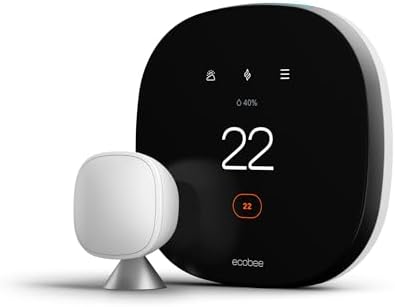
- Save up to 26%* per year on heating and cooling costs. ENERGY STAR certified. Included SmartSensor (50 dollar value) adj…
- Included SmartSensor keeps you comfortable where you are, not just where your thermostat is. Simply place SmartSensor in…
- Control from anywhere with your iOS or Android device
Its remote sensors can help address a common problem with central HVAC systems: one thermostat may not accurately represent the temperature throughout the entire home.
Key Features
- Large touchscreen
- Smart room sensors
- Occupancy detection
- Smart scheduling
- Remote smartphone control
- Energy reports
- Voice assistant functionality
- Smart-home integration
- Air-quality monitoring on supported configurations
The ability to prioritize occupied rooms can make it particularly useful for multi-room homes.
Best For
Large homes, families, multi-room temperature control, and smart-home enthusiasts.
Our Rating: 9.8/10
2. Google Nest Learning Thermostat — Best Learning Thermostat
The Google Nest Learning Thermostat remains a strong option for homeowners who want a thermostat that can learn heating and cooling preferences over time.

- Nest’s smartest, most advanced thermostat yet, the Google Nest Learning Thermostat (4th gen) is a beautiful, brilliant w…
- Improved compatibility: It works with most 24V systems, including gas, electric, oil, forced air, heat pump, and radiant…
- Easy control in the Google Home app: Adjust on your phone from anywhere[1] or by using your voice with Alexa, Siri, or G…
Key Features
- Learning schedules
- Smartphone control
- Automatic scheduling
- Energy reports
- Away features
- Google Home integration
- Compatible smart-home controls
- Attractive display
Instead of requiring you to manually program every schedule, the thermostat can adapt to your habits.
Best For
Google Home users, homeowners who prefer automatic scheduling, and people looking for a premium design.
Our Rating: 9.7/10
3. Google Nest Thermostat — Best Value
The Google Nest Thermostat is a simpler alternative to the Learning Thermostat and is aimed at shoppers who want smart temperature control at a lower price.

- Nest’s smartest, most advanced thermostat yet, the Google Nest Learning Thermostat (4th gen) is a beautiful, brilliant w…
- Savings you can count on: The Nest Learning Thermostat can help save up to 31% on heating and cooling bills[2]
- Improved compatibility: It works with most 24V systems, including gas, electric, oil, forced air, heat pump, and radiant…
Key Features
- Smartphone control
- Scheduling
- Energy-saving features
- Google Home integration
- Remote temperature adjustment
- Modern design
- Voice-assistant support on compatible configurations
It doesn’t offer every advanced feature of premium models, but it covers the basics well.
Best For
Apartments, smaller homes, first-time smart thermostat buyers, and budget-conscious shoppers.
Our Rating: 9.4/10
4. Honeywell Home T9 — Best for Multi-Room Temperature Control
The Honeywell Home T9 is particularly attractive for households where different rooms have noticeably different temperatures.

- Item Package Dimension- 9.1699999906466L X 7.399999992452W X 3.149999996787H Inches
- Item Package Weight – 1.45946017444 Pounds
- Item Package Quantity – 1
Its compatible room sensors allow the system to monitor temperature and occupancy beyond the location of the main thermostat.
Key Features
- Smart room sensors
- Multi-room temperature monitoring
- Smartphone control
- Scheduling
- Geofencing
- Energy management
- Touchscreen
- Smart-home integration
Best For
Large homes, multi-level properties, families, and homes with uneven temperatures.
Our Rating: 9.5/10
5. Amazon Smart Thermostat — Best for Alexa Users
The Amazon Smart Thermostat is a straightforward option for households already invested in Alexa.
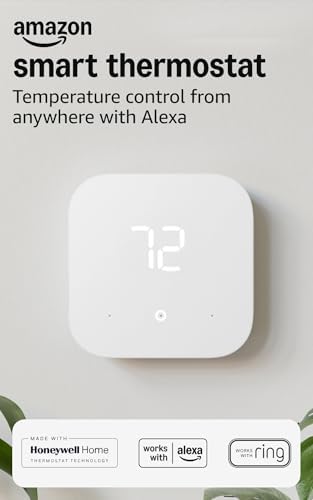
- The information below is per-pack only
- An Alexa thermostat – Amazon Smart Thermostat is an easy way to switch from a traditional thermostats for homes and help…
- Create comfort zones throughout your home by connecting to select Alexa devices to automatically adjust heating and cool…
Key Features
- Alexa integration
- Smartphone control
- Programmable schedules
- Energy-saving features
- Remote adjustment
- Modern design
- Alexa app support
Alexa integration can make temperature control convenient if you already use Echo devices throughout your home.
Best For
Alexa users, smart-home beginners, and budget-conscious shoppers.
Our Rating: 9.2/10
6. Sensi Touch 2 — Best Easy-to-Use Smart Thermostat
The Sensi Touch 2 focuses on a simple touchscreen experience combined with useful smart features.
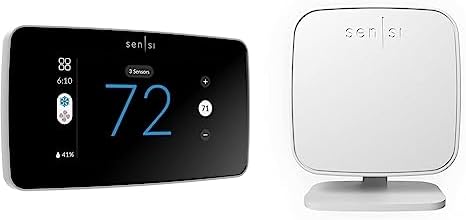
- WORKS WITH ROOM SENSORS: Compatible with Sensi Room Sensors to balance temperatures throughout your home (sold separatel…
- PRIVACY PROTECTION: Sensi won’t sell your personal information to third parties
- SAVE ABOUT 23% ON HVAC ENERGY*: The ENERGY STAR-certified Sensi Touch 2 smart thermostat can help you save energy with f…
Key Features
- Color touchscreen
- Smartphone control
- Flexible scheduling
- Remote access
- Usage reports
- Smart-home integration
- Compatible room sensor options
- Easy-to-understand interface
The touchscreen design makes it easy to adjust the temperature directly from the wall.
Best For
Families, first-time smart thermostat users, and homeowners who prefer a traditional thermostat interface with smart features.
Our Rating: 9.3/10
7. ecobee Smart Thermostat Enhanced — Best Mid-Range Smart Thermostat
The ecobee Smart Thermostat Enhanced offers many of the features that make ecobee popular without moving all the way to the premium model.

- Comfort where you need it most: SmartSensor detects which rooms are occupied and shares temperature readings with your e…
- Bedroom comfort: Place a SmartSensor in your bedroom, and your thermostat will prioritize that room’s temperature overni…
- Save energy when you’re away: SmartSensor detects when rooms are occupied and helps your thermostat adjust automatically…
Key Features
- Smart scheduling
- Smartphone control
- Occupancy detection
- Smart-home integration
- Energy reports
- Optional room sensors
- Touchscreen interface
- HVAC monitoring
It’s a strong choice for homeowners who want more advanced automation without necessarily needing every premium feature.
Best For
Families, mid-sized homes, smart-home users, and energy-conscious homeowners.
Our Rating: 9.5/10
8. Wyze Thermostat — Best Budget Smart Thermostat
The Wyze Thermostat is aimed at homeowners looking for affordable smart temperature control.
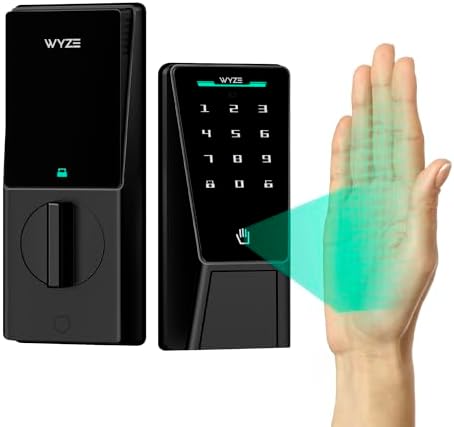
- Contactless Palm Vein Recognition — Wyze Palm Lock uses a highly secure biometric technology that reads the unique vein …
- Dual-Battery System with Emergency Charging — A 6-month main battery is backed by a 2-week secondary battery. If both dr…
- Peace of Mind with Auto Lock — A built-in gyroscope detects the angle and movement of the door in real time. Once it sen…
Key Features
- Smartphone control
- Scheduling
- Remote adjustment
- Smart-home integration
- Touch controls
- Energy-management features
- Compact design
It provides a relatively accessible entry point for people upgrading from a conventional programmable thermostat.
Best For
Budget buyers, apartments, smaller homes, and first-time smart thermostat users.
Our Rating: 9.0/10
What Makes a Good Smart Thermostat?
The best smart thermostat isn’t necessarily the most expensive model. You should choose one based on your HVAC system, home layout, smart-home ecosystem, and desired automation.
1. HVAC Compatibility
This is the first thing you should check.
Smart thermostats can support different systems, including:
- Central air conditioning
- Gas furnaces
- Electric heating
- Heat pumps
- Multi-stage systems
- Dual-fuel systems
- Radiant heating
- Humidifiers and dehumidifiers
Always use the manufacturer’s compatibility checker before buying.
2. C-Wire Requirements
Some smart thermostats require a C-wire, also called a common wire, to provide continuous power.
If your current thermostat doesn’t have one, you may need:
- A power adapter
- An included installation accessory
- An HVAC technician
- A compatible thermostat that supports alternative power methods
Don’t assume a thermostat will work simply because the old thermostat did.
3. Smart Scheduling
Smart scheduling is one of the biggest advantages of upgrading.
You can create schedules such as:
Morning: Comfortable temperature when you wake up.
Daytime: Energy-saving setting while you’re away.
Evening: Comfortable temperature when you return.
Night: Adjusted temperature while sleeping.
Some thermostats can learn your habits automatically.
4. Room Sensors
Room sensors are particularly useful in larger homes.
A traditional thermostat measures temperature in one location. A remote sensor can provide information from another room.
This can help when:
- Bedrooms are warmer than living rooms.
- Upstairs is hotter than downstairs.
- Certain rooms receive more sunlight.
- You want to prioritize occupied rooms.
The ecobee Premium and Honeywell Home T9 are strong options for sensor-based temperature management.
Smart Thermostat Connectivity
| Connectivity | Benefit | Consideration |
|---|---|---|
| Wi-Fi | Remote control | Requires reliable network |
| Bluetooth | Local connectivity | Limited remote access |
| Thread | Efficient smart-home networking | Requires compatible ecosystem |
| Matter | Cross-platform compatibility | Features vary by ecosystem |
| Zigbee/Z-Wave | Smart-home automation | Often requires hub |
Wi-Fi is the most common choice because it enables remote control through a smartphone.
Best Smart Thermostats by Use Case
| Use Case | Recommended Thermostat |
|---|---|
| Best overall | ecobee Smart Thermostat Premium |
| Best learning | Google Nest Learning Thermostat |
| Best value | Google Nest Thermostat |
| Best multi-room | Honeywell Home T9 |
| Best for Alexa | Amazon Smart Thermostat |
| Best touchscreen | Sensi Touch 2 |
| Best mid-range | ecobee Smart Thermostat Enhanced |
| Best budget | Wyze Thermostat |
| Best for families | ecobee Smart Thermostat Premium |
| Best for Google Home | Google Nest Learning Thermostat |
Can a Smart Thermostats Save Money?
A smart thermostat can potentially reduce energy waste by adjusting heating and cooling schedules based on occupancy and user preferences.
However, actual savings depend on:
- Climate
- HVAC efficiency
- Home insulation
- Temperature settings
- Occupancy
- System type
- Thermostat configuration
Don’t purchase a smart thermostat solely based on a promised savings percentage. Your actual results can vary significantly.
Smart Thermostats and Energy Monitoring
Many modern thermostats provide energy reports or usage insights.
These features can help you understand:
- When your HVAC runs most
- How often heating or cooling operates
- How your usage changes over time
- Potential opportunities to adjust schedules
Energy reporting can be particularly useful when trying to lower household energy consumption.
Smart Thermostats for Apartments
Renters should check whether they are allowed to replace their thermostat.
A smart thermostat can be useful in an apartment if:
- The HVAC system is compatible.
- You have permission to install it.
- The thermostat can be returned to its original condition.
- Wi-Fi coverage is reliable.
If you cannot permanently modify the HVAC system, consider simpler temperature-control solutions where available.
Smart Thermostat for Large Homes
Large homes often benefit most from thermostats with room sensors.
Instead of relying entirely on the temperature around the main thermostat, sensors can provide additional information from different rooms.
For large properties, consider:
- Multiple sensors
- Zoned HVAC
- Occupancy detection
- Geofencing
- Detailed energy reports
How to Install a Smart Thermostat
Many smart thermostats are designed for DIY installation, but HVAC systems can vary considerably.
A typical installation involves:
- Turn off HVAC power.
- Photograph existing wiring.
- Label each wire.
- Remove the old thermostat.
- Install the new mounting plate.
- Connect the appropriate wires.
- Restore power.
- Complete setup in the manufacturer’s app.
- Test heating and cooling.
- Configure schedules and sensors.
If you’re unsure about wiring or have a complex HVAC system, professional installation is the safer option.
Smart Thermostat Security and Privacy
Smart thermostats connect to your home network and may collect information about your home’s temperature and occupancy patterns.
Look for:
- Strong account security
- Two-factor authentication
- Secure Wi-Fi
- Firmware updates
- Privacy controls
- Transparent data policies
Use a unique password for your smart-home account and keep the thermostat firmware updated.
Are Smart Thermostats Worth It?
For many homeowners, smart thermostats are worth considering because they combine convenience with better temperature management.
They can provide:
- Remote temperature control
- Automatic scheduling
- Occupancy-based adjustments
- Energy reports
- Smart-home integration
- Multi-room temperature monitoring
- Alerts and notifications
The greatest benefit often comes from automation rather than simply controlling the thermostat from your phone.
Final Verdict
The ecobee Smart Thermostat Premium is our overall pick for the best smart thermostat in 2026. Its combination of smart sensors, scheduling, occupancy features, energy monitoring, and smart-home integration makes it an excellent choice for many homes.
The Google Nest Learning Thermostat is a strong alternative for homeowners who want automatic learning and a polished Google Home experience. The Honeywell Home T9 is particularly useful for multi-room temperature management, while the Amazon Smart Thermostat is a compelling choice for Alexa households.
For shoppers seeking a more affordable option, the Google Nest Thermostat and Wyze Thermostat offer useful smart controls without the price of premium models.
Before buying, check HVAC compatibility, C-wire requirements, heating and cooling stages, heat-pump support, room sensors, connectivity, smart-home compatibility, installation requirements, battery or power needs, privacy, and potential subscription costs.
The best smart thermostat should fit your HVAC system first and your smart-home preferences second. A thermostat with fewer features that works reliably with your heating and cooling system is usually a better choice than a premium model that isn’t fully compatible.
Frequently Asked Questions
What is the best smart thermostat in 2026?
The ecobee Smart Thermostat Premium is our overall pick because it combines room sensors, smart scheduling, occupancy detection, energy monitoring, and broad smart-home functionality.
Are smart thermostats worth it?
Yes, for many homeowners. They provide remote control, automated schedules, occupancy-based adjustments, and energy insights that can make HVAC management more convenient.
Can a smart thermostat reduce energy bills?
It can potentially reduce energy waste by automatically adjusting heating and cooling schedules. Actual savings depend on your home, climate, HVAC system, insulation, and temperature settings.
Do smart thermostats require Wi-Fi?
Many smart thermostats use Wi-Fi for remote smartphone control, cloud features, notifications, and smart-home integration. Basic temperature control may still work if the internet connection is unavailable.
What is a C-wire?
A C-wire, or common wire, supplies continuous electrical power to many smart thermostats. Some systems don’t require one, while others need an adapter or additional wiring.
Can I install a smart thermostat myself?
Many models support DIY installation, but compatibility and wiring can vary. If your HVAC system is complex or you are uncertain about the wiring, professional installation is recommended.
What is the best smart thermostat for multiple rooms?
The ecobee Smart Thermostat Premium and Honeywell Home T9 are strong options because they support remote room sensors that can provide temperature information from different areas of a home.
Do smart thermostats work with heat pumps?
Some smart thermostats support heat pumps, but compatibility varies by model and HVAC configuration. Always check the manufacturer’s compatibility tool before purchasing.
Which smart thermostat is best for Alexa?
The Amazon Smart Thermostat is a natural choice for Alexa users, while ecobee also offers strong Alexa integration on compatible models.
Which smart thermostat is best for Google Home?
Google Nest thermostats are designed around the Google Home ecosystem, making them a strong choice for households already using Google smart-home products.
Do smart thermostats work with Apple Home?
Some models support Apple Home, while others may require specific hubs or ecosystems. Check current compatibility before buying.
Can smart thermostats control air conditioning?
Yes. Many compatible smart thermostats can control both heating and central air conditioning systems. However, system compatibility should always be confirmed before installation.
How long do smart thermostats last?
A smart thermostat can potentially provide several years of service, but lifespan depends on the model, installation, environmental conditions, software support, and hardware reliability.
What should I consider before buying a smart thermostat?
Focus on HVAC compatibility, C-wire requirements, heating and cooling stages, heat-pump support, room sensors, smart scheduling, Wi-Fi connectivity, smart-home compatibility, energy monitoring, installation requirements, privacy, and total cost.